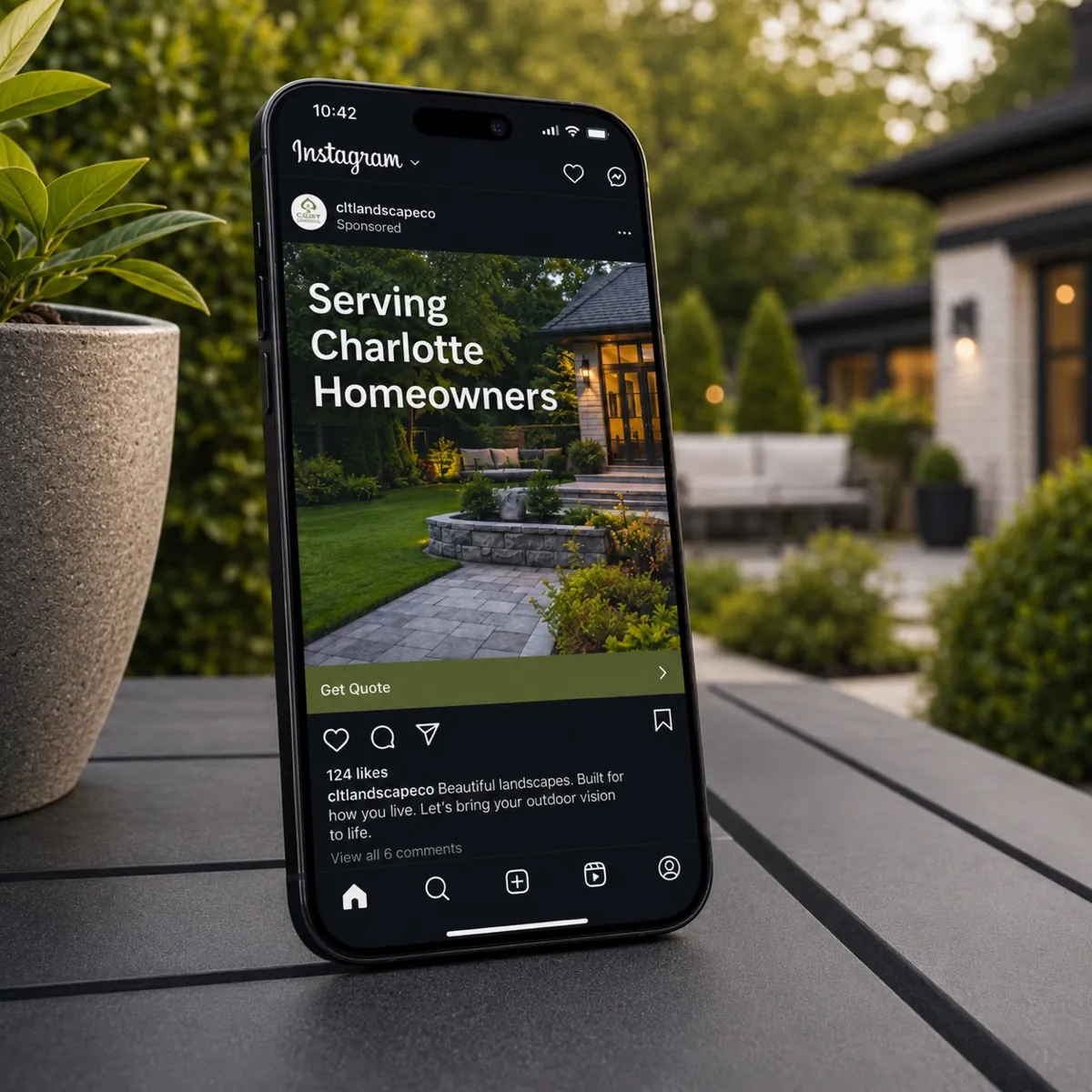
Social media will not replace a good website or strong local search, but it keeps your work in front of homeowners and feeds proof to people deciding whether to call you.
The trick is knowing which platforms are worth a busy crew's time. You do not need to be everywhere. Spreading yourself across every app is the fastest way to post nothing consistently.
It is far better to pick the handful of networks where your buyers actually are, show real work, and keep a steady rhythm. Here is what each of the five does well.
Key takeaways
- You do not need to be everywhere, pick two or three networks and stay consistent.
- Facebook and Instagram are the natural starting point for most residential landscapers.
- Pinterest and Houzz reach planners and design-minded buyers before they hire.
- LinkedIn earns its spot only if you chase commercial or referral work.
- Treat social as the top of the funnel and pair it with a site, local SEO, and fast follow-up.
Why treat social media as the top of the funnel?
Social media builds awareness and trust over time, but it rarely captures ready-to-buy demand the way search does.
Pair it with a website, local SEO, and fast follow-up so the interest it creates turns into booked estimates.
The goal is not likes. It is staying visible and trusted so the right homeowners call when they are ready.
Why is Facebook the natural home base?
Facebook still reaches the widest local audience, which makes it the natural home base for most landscaping companies. It is where neighbors ask for recommendations, where community groups live, and where you can run targeted ads to your exact service area.
Set up a proper business page and post regularly:
- Before-and-after photos of recent projects
- Short tips for keeping a yard healthy
- Quick updates on the kind of work you are taking on
Respond to comments and messages quickly. Speed matters more than people expect, because a slow reply often means the homeowner already called the next company.
Ask happy customers to leave a review on your page. When you are ready to spend, Facebook ads let you target by location, age, and interests, so you can put a strong offer in front of homeowners in the towns you actually serve.
How should landscapers use Instagram?
Landscaping is visual work, and Instagram is built for visual work. It is one of the best places to show the quality of what you do through photos and short clips: before-and-afters, finished installs, and behind-the-scenes looks at the crew on a job.
Use hashtags with intent. Mix broad industry tags like #landscaping and #outdoorliving with location tags for the region you work in, so local homeowners can actually find you. A simple branded hashtag also makes it easy to collect your own work in one place.
Consistency beats perfection here. A steady cadence of real project photos, posted a few times a week, will do more than a flurry of polished posts that stops the moment the season gets busy.
Why does Pinterest work differently?
People use Pinterest to plan and gather ideas, often months before they hire anyone. That makes it a useful place to plant your work in front of homeowners while they are still dreaming about a project.
Organize your work into boards by theme: garden designs, patios and outdoor living, low-maintenance landscaping, seasonal color. Pin high-quality images of completed projects and transformations.
Because Pinterest doubles as a search engine, write clear, keyword-rich descriptions on your pins and boards. It is also a strong fit for helpful, evergreen content like planting guides or yard-care tips, which positions you as the expert when that planner is finally ready to call.
Who is Houzz for?
Houzz is the most niche pick on this list, and that is exactly why it belongs here. It is a platform built specifically for home and outdoor projects, and the people browsing it are already in a buying mindset for design and renovation work.
Build out a profile with a strong project portfolio that shows your best design and install work. Gather reviews from past clients, since social proof carries a lot of weight with the design-minded buyers on Houzz.
If you do higher-ticket landscape design and outdoor living projects, Houzz can connect you with exactly the homeowners looking for that work.
Does LinkedIn make sense for landscapers?
LinkedIn is the odd one out, but it earns its spot if you do commercial work or want to build referral relationships. It is less about reaching homeowners and more about connecting with other professionals: property managers, builders, developers, and commercial decision-makers.
Keep a clear profile that highlights your experience and the kind of projects you take on. Share the occasional project win or insight, join industry conversations, and connect with the people who hire or refer companies like yours.
For a residential-only business this one is optional. For anyone chasing commercial accounts, it is worth the effort.
How do the five networks compare?
Each network reaches a different buyer at a different moment. Match the platform to the work you want more of.
| Network | Best for | Buyer mindset |
|---|---|---|
| Widest local reach, reviews, targeted ads | Asking neighbors for recommendations | |
| Showing visual quality of work | Browsing and discovering | |
| Idea-stage homeowners, evergreen tips | Planning months ahead | |
| Houzz | Higher-ticket design and install | Ready to buy design work |
| Commercial and referral relationships | Professional decision-makers |
How do you pick a few and stay consistent?
The biggest mistake landscapers make on social media is trying to do all five at once and burning out by spring.
Start with one or two that fit your work, usually Facebook and Instagram for residential, with Houzz or LinkedIn added when the project mix calls for it.
Show real local work, keep a rhythm you can sustain, and remember the goal is staying visible and trusted. If you want help turning that visibility into booked estimates, book a strategy call.
Make social part of a system that actually books work
Posting is the easy part. The hard part is turning attention into booked estimates. If you want your website, local search, ads, and follow-up working together so social media has somewhere to send people, let's talk it through on a quick call.
Want this done for you? See our Meta Ads service.
Frequently asked questions
Which social network should a landscaper start with?
For most landscaping companies, Facebook and Instagram are the place to start. They reach the most local homeowners, they reward before-and-after photos, and they let you run targeted ads to your service area. Add Houzz or Pinterest once you are selling higher-ticket design and install work.
How often should a landscaping business post on social media?
Consistency matters more than volume. A steady cadence of a few posts a week, mostly real project photos and short job clips, works well for a busy crew. A rhythm you can keep up beats a burst of daily posts that stops the moment the season gets busy.
Does social media actually bring landscapers leads, or just likes?
Social media builds awareness and trust, but it rarely captures ready-to-buy demand the way search does. Treat it as the top of the funnel: it keeps you visible to local homeowners and feeds proof to people who later search for you. Pair it with a website, local SEO, and fast follow-up so the interest turns into booked estimates.
What should landscapers post to get more work from social media?
Lead with before-and-after photos, finished-project shots, short clips of the crew working, and the occasional behind-the-scenes or maintenance tip. Show the quality of the work and the type of jobs you want more of. Generic stock images and quotes get ignored. Real local work earns saves, shares, and calls.