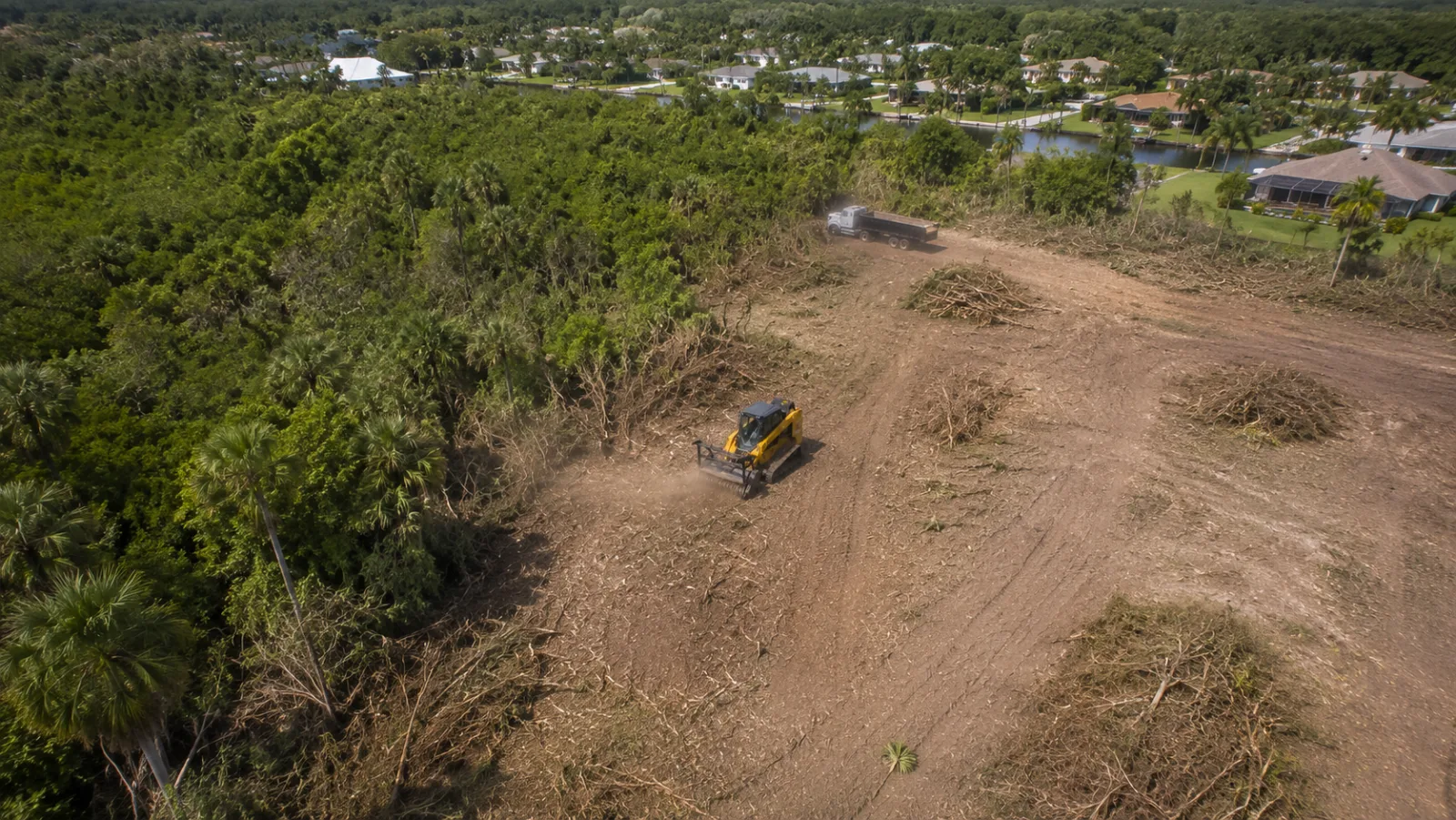
Nobody impulse-buys land clearing. A family closes on five wooded acres. A builder gets a pad date. A county letter shows up about a fire hazard. Then someone starts searching for a company with real equipment that can start soon. Land clearing is one of the highest-intent, highest-ticket services in the outdoor world, and most of the companies doing the work have almost no marketing behind them. That is the whole opportunity. This guide covers the system we build for clearing companies: how your buyers actually find you, what makes them trust you enough to hand over a five-figure job, what to do about pay-per-lead services, and how to become the company that gets recommended when people skip Google and just ask an AI.
A quick note on where this comes from. I have run a marketing agency for the green industry since 2016, and clearing companies started finding us through our landscaping and excavation work. What struck me was how underserved they were. The same systems that fill a landscaper's schedule work for clearing, often better, because the jobs are bigger and the competition online is thinner. This article is that playbook, written out in full.
Start with who is actually calling you
Every good marketing decision in this trade comes from one fact: your buyer already has a project in motion. Nobody browses for land clearing. Something happened first.
- A land purchase. New acreage, big plans, and no idea what clearing costs.
- A build. A homeowner or builder needs a pad, a driveway, or a perc-ready lot, and the schedule is already set.
- Ground that got away. Pasture gone feral, fence lines swallowed, a lot the county flagged.
- Recurring commercial work. Rights of way, utility corridors, solar sites, development phases.
Three things are true about almost all of them. They have a deadline. They will call two or three companies at most. And they are either buying this for the first time in their life, or they buy it every month for a living. Your marketing has one job: be one of those calls, then be the obvious choice once they compare.
Clearing jobs are rarely lost on price. They are lost on findability, trust, and speed. Everything in this guide serves one of those three.
Findability: win the searches you are missing today
In lawn care and landscaping, marketing has to create desire. Clearing is different. The demand already exists, typed into Google every single day: lot clearing, forestry mulching, brush removal, land clearing near me. What is missing in most markets is a clearing company that takes those searches seriously. Look at what ranks in your county right now. In many areas it is a directory, a forum thread, and a company two hours away.
Here is the stack that fixes it, in priority order.
- A real page for every service you run. Lot clearing, forestry mulching, bush hogging, grading prep, right-of-way maintenance. Each page should read the way you would explain the work standing on the property: what it is, what machines you bring, what the land looks like when you leave, and what drives the price up or down. One substantial page per service beats one thin page that lists everything.
- Your service area, stated plainly. Name the counties and regions you actually mobilize to. This filters out the calls you do not want just as well as it attracts the ones you do.
- A Google Business Profile that looks alive. Job photos going up regularly, services listed by name, and reviews that actually say the words land clearing and mulching. For map searches, that profile is not the first impression. It is the whole impression.
This is the system behind our land clearing SEO work, and it moves faster in this vertical than in any other corner of the green industry we serve, simply because so few competitors are trying.
Trust: proof wins the big-ticket job
A clearing project is a four or five-figure decision, usually made by someone who has never hired for it before. Their fears are specific. Damage to the land or a neighbor's fence. An uninsured operator. A deposit that disappears. A site left a mess. You win by answering those fears before the first phone call.
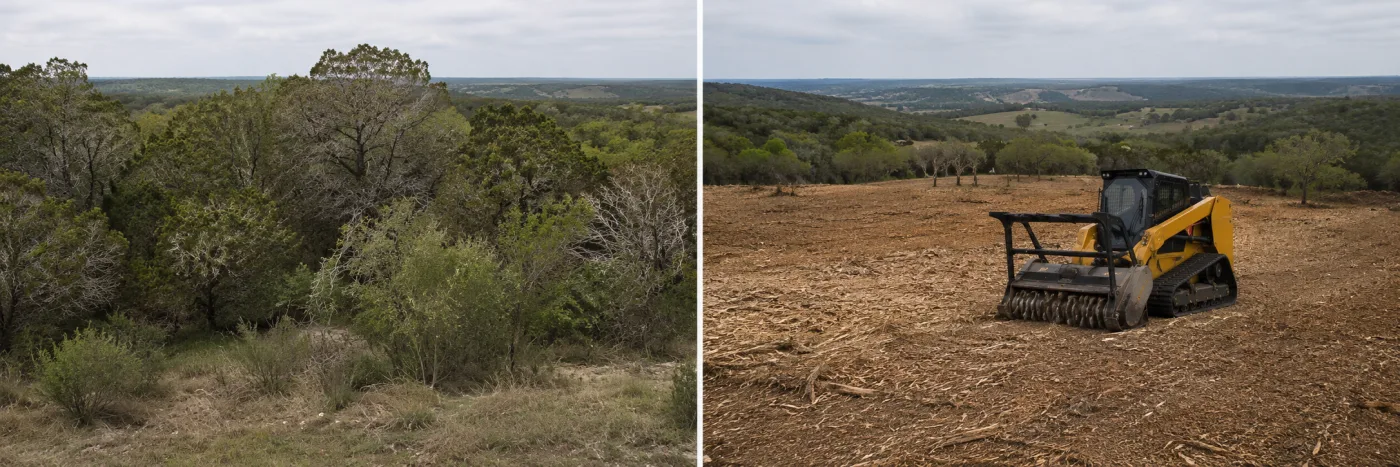
- Before and after photos. The single most persuasive asset a clearing company owns. Same property, same angle, transformation obvious.
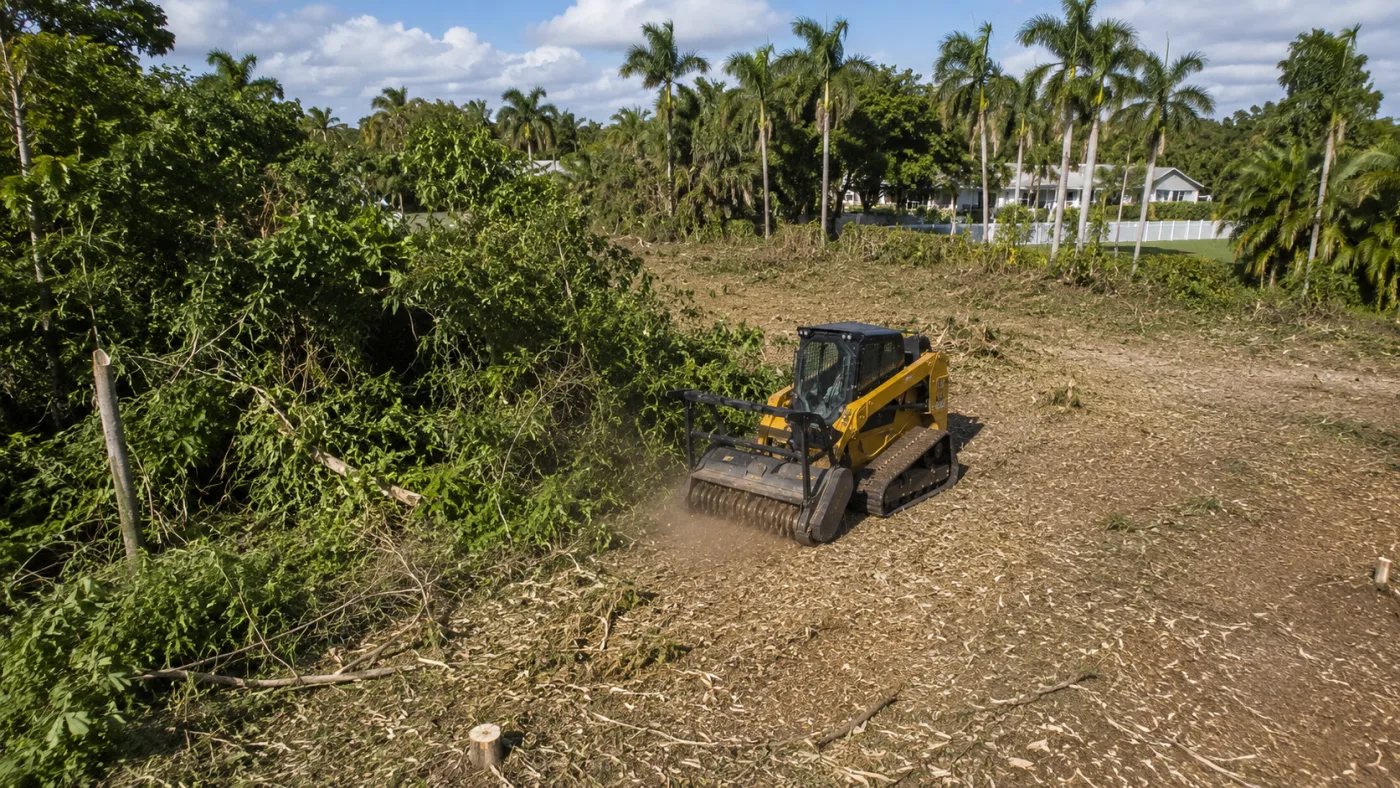
- Your equipment, shown and named. A mulching head on a skid steer says capability faster than any paragraph. Buyers in the trade read the machine list. Buyers outside it still feel the difference.
- Licensed and insured, up front. Not buried in the footer. For the nervous first-time buyer, it is often the deciding filter.
- Reviews that tell a story. Showed up when they said. Quoted straight. Left it clean. A steady stream of reviews like that becomes a marketing engine on its own, which is why review management is core to how we run this vertical rather than an add-on.
How the contracts actually happen
One-off homeowner jobs keep the machines moving. Contracts build the business. Builders, general contractors, land brokers, utilities, and municipalities all have repeat work, and they find you the same way homeowners do the first time: they search, they check your proof, and they test you with one job.
The difference is what happens after. The first builder job is a marketing outcome. The next twenty are an operations outcome, earned through easy scheduling, straight communication, clean sites, and invoices that match quotes. Marketing keeps making the first impression. Your site should look like a company that handles commercial work, with a page that speaks to builders and photos that include the kind of ground they buy.
The pay-per-lead question, answered honestly
Search for land clearing leads and you will find marketplaces happy to sell them to you. Pay per lead or per booked appointment, and work shows up without any marketing of your own. Are they worth it? Here is the honest version.
What they get right: speed. There is demand in the pipe this week, and when the calendar has holes, a purchased lead that closes beats an empty day.
What they cost you: the same lead usually goes to several competitors at once, so you are racing to the phone to win a price comparison. Quality swings hard from one lead to the next. And the deeper problem is that every dollar rents someone else's visibility. Stop paying and you own nothing. No rankings, no review momentum, no asset a future buyer of your business would pay a dime for.
The play that works: treat purchased leads as a bridge, not a plan. Use them to fill gaps while you build your own visibility. Once your own phone rings, you get the version that compounds: exclusive inquiries from people who already picked you, and close rates a shared lead can never match.
The economics: one job changes the math
Most clearing companies underinvest in marketing because they price it the way a mowing company would. The math is different when your average ticket carries four or five figures. One added job a month can cover an entire marketing budget, and everything past that is growth. That is the whole calculation, and it is why the companies that move first in a market tend to run away with it.
The cheapest win is not more leads. It is speed on the leads you already get. Your buyer has a deadline, and the first company to answer and walk the property usually wins. But operators are in a cab all day, calls roll to voicemail, and the buyer dials the next result. Instant text-back on missed calls, same-day quotes, and an answering layer that books the site walk while you are on the machine will convert jobs you are currently losing without knowing it. Fix response time before you spend another dollar on anything else.
The crossover play: adding land clearing to a landscaping business
Some of the best-positioned clearing operations in the country did not start as clearing companies. They are landscapers and excavation crews who added land clearing and bush hogging, took a few jobs, and discovered the margins. If that is you, you are holding an advantage a from-scratch clearing startup would take years to build: an established brand, a base of reviews, and local trust.
The mistake is treating clearing like a line item on a landscaping page. It needs its own presence. Its own page, its own photos, its own reviews. The clearing buyer is a different person on a different mission, and both search engines and AI assistants recommend companies that clearly do the thing, not companies that mention it in passing. Give the service its own home and your existing reputation does the rest of the lifting.
Showing up when buyers ask AI instead of Google
A growing share of these projects now starts with a question typed into an AI assistant. What does it cost to clear two acres? Who does forestry mulching near me? The answers get assembled from the same raw material this guide has you building: service pages that actually explain the work, an active profile, consistent reviews, real photos. Companies with specific, honest, well-structured pages get named in those answers. Companies with a thin brochure site simply do not exist in that conversation.
Nobody in the clearing world is preparing for this yet, and that is exactly the reason to start. It is the same head start the early SEO adopters got, being offered a second time.
The complete system, in one list
- A dedicated page for every clearing service you run, plus a plainly stated service area.
- A Google Business Profile with fresh job photos and reviews that name the work.
- Before and after proof, your equipment, and licensed-and-insured where nobody can miss it.
- Minutes-fast response on every inquiry, automated for the hours you are in the cab.
- Purchased leads as a bridge if you need them, never as the plan.
- A commercial-facing story for builders and repeat-work buyers.
- Pages structured clearly enough that AI assistants can recommend you by name.
If clearing or bush hogging is your business, or the vertical you are adding to one, this is the exact system our team builds. See how we work with land clearing companies, or reach out through the form on this page and we will look at your market together.
Frequently asked questions
How do you advertise a land clearing business?
Start where the buyer starts: a service page for each thing you actually do, a Google Business Profile with real job photos and reviews, and fast follow-up on every inquiry. Land clearing demand is project-driven, so capturing existing search demand beats trying to create it. Add builder and realtor relationships for repeat work, and use social to publish proof, not to chase leads.
How do land clearing companies find contracts?
Recurring contracts come from builders, general contractors, utility and right-of-way work, land brokers, and municipalities. Win the first job through visibility and proof, then stay on their list by being easy to schedule, communicating well, and leaving sites clean. One builder relationship can be worth more than months of one-off leads.
Is a land clearing business profitable?
It can be one of the most profitable outdoor services, because jobs are high-ticket and equipment does the heavy lifting. Profitability usually comes down to route-worthy scheduling, fuel and machine costs, and a steady pipeline. Marketing matters because one added job per month often covers the entire marketing budget.
Are pay-per-lead services worth it for land clearing companies?
They can fill gaps, but the leads are usually shared with competitors, quality varies, and you own nothing when you stop paying. Companies that build their own visibility get exclusive inquiries, better close rates, and an asset that compounds. A common path is using pay-per-lead as a bridge while your own marketing ramps.
How much should a land clearing company spend on marketing?
Anchor it to job value, not habit. If your average job is several thousand dollars, a marketing investment that adds even one or two jobs a month pays for itself quickly. Growing companies in project-based trades commonly invest a mid-single-digit percentage of revenue; established route density can bring that down.