Every landscaping company wants growth. Fewer want the part that actually makes growth hold together: clearer positioning, better follow-up, tighter operations, a stronger reputation, and a marketing system that does not depend on luck. That is what makes Nate's story from Precision Landscape Management worth paying attention to.
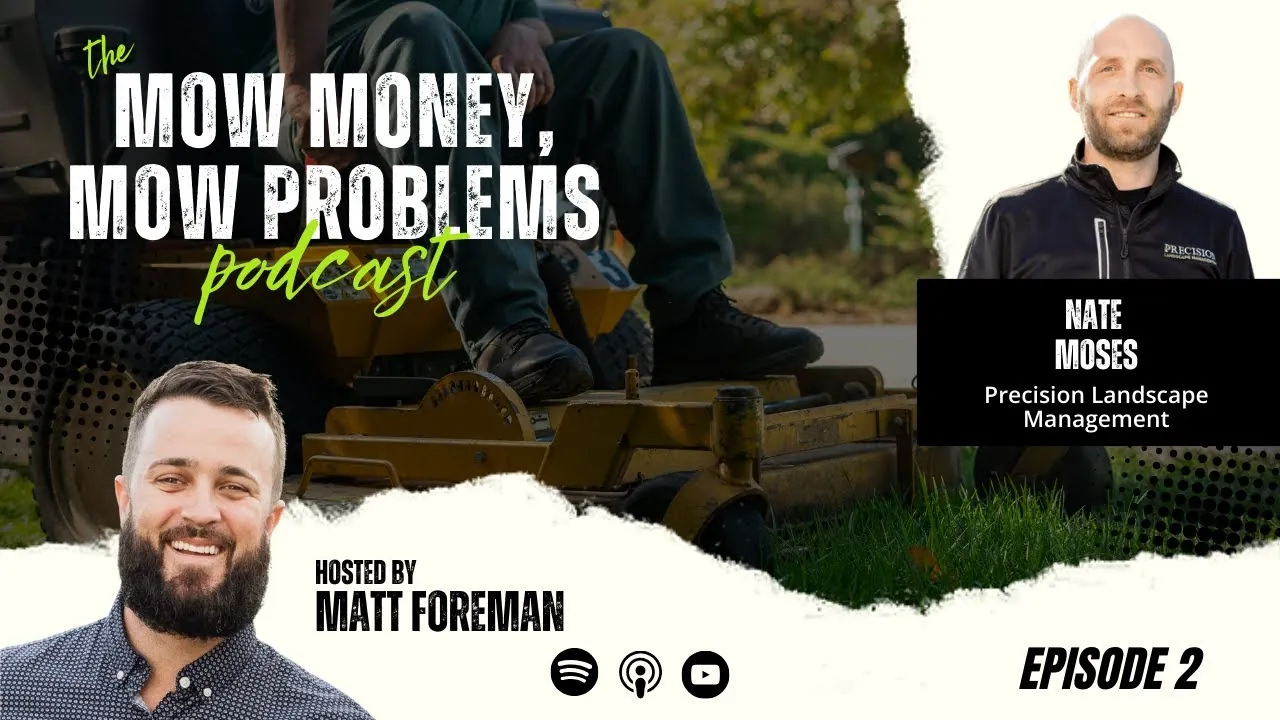
This recap comes from episode 2 of the Mow Money, Mow Problems podcast, featuring Nate from Precision Landscape Management. The episode is not just another operator interview. It is a useful reminder that landscaping business growth is usually built in layers. You earn trust in the field, you tighten how the company shows up online, and then you make it easier for the right customers to find you, believe you, and take the next step.
For lawn and landscape operators, the lesson is blunt: better work alone is not enough if the market cannot clearly see it. A clean property gets you a referral. A clear growth system helps you turn that reputation into consistent demand.
The growth problem most good landscaping companies run into
A lot of strong operators hit the same wall. They have the crews. They have the service quality. They have happy customers. But the phone still rises and falls with seasonality, referrals, and whatever the last marketing vendor tried.
That is not a talent problem. It is usually a visibility and trust problem.
Homeowners and commercial buyers do not hire the best landscaping company they have never heard of. They hire the company that feels credible, looks organized, answers their questions, shows proof, and makes the next step obvious. If your website, reviews, photos, ads, and follow-up are all telling different stories, the buyer feels that friction even if they cannot name it.
The goal is not to make a landscaping company look bigger than it is. The goal is to make the real company easier to trust.
What Precision Landscape Management shows about marketing that fits the operator
Precision Landscape Management is a useful example because the story sits in the real world. This is not generic brand awareness talk. It is the practical work of helping a landscape company convert local trust into measurable business opportunities.
The strongest marketing does not replace reputation. It organizes it. It takes the quality already happening in the field and turns it into a clearer path for buyers. (For the full numbers behind this client, see the Precision Landscape Management case study.)
That path usually includes:
- A website that explains the right services clearly
- Local SEO that helps buyers find the company when they are actively searching
- Paid ads that target high-intent prospects instead of random clicks
- Reputation assets that reduce doubt before the first call
- Follow-up systems that keep leads from falling through the cracks
None of that is flashy. That is the point. Landscaping marketing gets better when it gets more operational.
Lesson 1: Growth needs a clear offer, not just more leads
"More leads" sounds good until the wrong leads start eating your schedule. A company can generate inquiries and still fail to grow profitably if those inquiries are poor-fit, low-budget, outside the service area, or attached to work the company does not really want.
One of the big takeaways from Nate's story is that growth has to be aimed. A landscaping company should know which services it wants more of, which neighborhoods or commercial segments fit best, and what kind of customer makes the business stronger.
That clarity should show up everywhere: the homepage, service pages, Google Business Profile, ads, landing pages, and sales follow-up. A buyer should not have to work hard to understand what you do best. If the business wants more design and build, maintenance contracts, enhancements, lawn care programs, or commercial work, the marketing should not treat all services like equal priorities.
Lesson 2: The website has to sell trust before it sells services
A landscaping website is not just a brochure. It is often the first sales conversation. Before a prospect calls, they are checking whether the company feels professional, whether the work looks real, whether the service area matches, and whether the team seems like people they can trust on their property.
That means the website has to do more than list services. It needs to answer buyer anxiety:
- What type of properties do you work on?
- What services are you best at?
- Do you have proof of results?
- Can I see real project photos?
- What happens after I request an estimate?
That is why websites built for lawn and landscape companies need different choices than generic home service templates. Green industry buyers care about visual proof, responsiveness, local credibility, and whether the company looks organized enough to handle the job.
Lesson 3: Reputation is not a side quest
Most operators know reviews matter. The problem is that many still treat reviews like something that happens after the real work. In reality, reputation is part of the sales process.
When a prospect compares three landscaping companies, reviews can be the difference between a call and a closed tab. Recent reviews, strong project photos, helpful responses, and a clean Google Business Profile all make the buyer feel safer.
That is why reputation management belongs inside the growth system. It is not vanity. It is conversion support. If the crews are already doing excellent work, the business should be capturing that proof consistently. A simple review request process, fresh jobsite photos, and a few customer story posts can do more for trust than another vague ad headline ever will.
Lesson 4: Paid ads work better when the back end is ready
Paid ads can make the phone ring. They can also expose every weak spot in the company. If the landing page is thin, the offer is unclear, the intake process is slow, or the follow-up is inconsistent, paid traffic just gets expensive faster.
That is why operators should not think about paid ads for lawn and landscape companies as a standalone fix. Ads need a working path behind them: a strong page, a clear call to action, fast response, useful tracking, and a sales process that knows what to do next.
The goal is not more noise. The goal is more qualified conversations that turn into booked work.
The real takeaway for landscape operators
Nate's Precision Landscape Management story points to a bigger truth: scalable growth is not one trick. It is a system. The field work creates the reputation. The website explains it. SEO captures active demand. Ads accelerate the right offers. Reviews reduce doubt. Follow-up protects the opportunities.
When those pieces work together, the company stops depending on hope as a marketing plan. That is where growth starts to feel less random.
If your lawn or landscape company is ready to tighten the system behind the work, start with the basics: clarify the services you want more of, sharpen the website, strengthen local visibility, and make follow-up boringly consistent. Boringly consistent is where a lot of money hides.
Build the system behind the work
If your landscaping company is growing on reputation but the demand still feels random, let us look at the whole path: your offer, your website, your local visibility, your reviews, and what happens after someone reaches out.
Want the full breakdown? Read the Precision Landscape Management case study.
Frequently asked questions
What can landscaping companies learn from Precision Landscape Management?
The main lesson is that growth becomes easier when field reputation, online presence, lead generation, and follow-up all support the same business goal. Better marketing does not replace good work; it makes good work easier for the right buyers to find and trust.
Should a landscaping company focus on SEO or paid ads first?
It depends on the current problem. If the company needs long-term visibility in its service area, local SEO is usually the foundation. If it needs faster demand for specific services, paid ads can help. The strongest approach often combines both, supported by a website that can convert visitors.
How important are reviews for landscaping business growth?
Reviews are critical because buyers use them as trust shortcuts. A landscaping company with strong recent reviews, real photos, and thoughtful responses usually feels safer than a company with thin proof, even if both do good work.
What should a landscaping website include to generate better leads?
A strong landscaping website should include clear service pages, real project photos, service area information, proof points, reviews, simple calls to action, and a fast estimate request path. The website should help buyers understand whether the company is the right fit before they call.
Episode transcript
Read the full transcript
what is up everybody Welcome to the Mow Money, Mow Problems podcast where we sit down with successful green industry business owners and have a conversation about their Journey their business their successes their struggles and their insights from all of the above my name is Matt Foreman Owner of Lawn & Land Marketing and today we are joined by Nate Moses of Precision Landscape Management out in Greenville South Carolina Nate thank you for being on with me today
Matt thank you for having me it's a pleasure to uh to join you on this absolutely and it has been it's been great getting to know you so just a full disclosure Nate and I have had a partnership a working relationship for a while so I I do know a bit about you but I'm I'm excited to learn more and I'm excited for the people to learn more about you and precision so with that what can
you tell me about yourself Precision what do you guys do where do you do it and who do you service yeah yep so just kind of a quick overview it's Nate Moses company is Precision Landscape Management we're out of Greenville South Carolina and we offer pretty full service landscape offering our clients mostly residential clients a little bit of commercial work but mostly high-end residential we do maintenance design work installation work irrigation Lawn Care plant Health Care
kind of the kind of full service offerings for our clients awesome so did your company always start out with that Suite of services did it start out with more less yeah we really started very simple and and kind of added on things as we saw clients needing additional work it's really evolved over the years but as we started out I mean it was kind of your basic grass cutting and and the maintenance service that kind of
got us kicked off cool so with getting kicked off where did you where did you really start like how did you even come about the green industry obviously there's a million different channels that you can jump into you've obviously jumped into this this one pretty hard because you're very successful at it so what what got you started here yeah yeah great question so I mean thinking way back I've always I mean since since the time I
was a kid maybe 10 12 years old kind of took a push mower and to some of the neighbors cut some grass and that sort of thing and I would say just wanting to make a few bucks and being willing to work hard and you know growing up I grew up in Michigan and we would do some snow shovel snow and winter and we'd cut some grasp in the summer and I just thought it was cool
that a little bit of hard work and a simple push mower me would give you you know 20 30 bucks whatever and so that's kind of how I got introduced to the industry in the first place in high school and college um you know had some interest that maybe I wanted to pursue or whatever and through the course of going to college and realizing I was not a great student sort of made me step back and
think is this really going to be my career that the the you know the major that I took in college is this really going to be my career is that really line up with my interest and so got some adviced and found out that probably school was not going to help me get into the industry that I enjoyed and I thought you know I did enjoy being out divorc enjoyed working hard working with my hands and
it was at that time I decided you know I am going to pursue a career in the landscape indistry and so that would have been about two years into college that I made that decision awesome so with that is that when Precision was founded did you start something else and and when was that like what year yeah so I mentioned that I I grew up in Michigan and I went to a school in Greenville South Carolina
and so those climates are pretty different and I I was aware that I needed to learn the local climate learn some of the local plants and learn the local landscape industry and so I actually made an intentional decision to work with a local landscape company for one full year before decided stting to kind of open my own business I would not say I was clear at the time that I would start my own business but I
knew that I would make a career out of the landscape industry it's not a surprise that I ended up you know sharting my own business sort of always been a little bit entrepreneurial but I think if I had joined a company that had growth opportunities I may have stayed within it and so just kind of the way things worked out to to my own business but the the year that I stopped going to school was in
200 7 and in 2010 Precision was in its current version was was originally formed but I was doing some kind of side work worked for another company did some side work also went into a different industry for a couple years as I was kind of developing the the finances needed to to start the business awesome so wow yeah over 13 years in business I don't you don't have to have a perfect recollection of this but was
there any moment early on where you kind of contemplated is this going to work or has it just been like Gang Busters ever since yes and no so yeah I mean I think if you're an entrepreneur and you sort of are driven that's a great thing but it it leads to maybe some chaos and so there definitely have been a lot of moments throughout the years where I was like man is this is this really what
I want to keep doing I didn't not it at the time but I was creating those on those problems for myself you know I like to think of myself as an organized person but my level of organization and the level of organization needed for a growing business can can look different and so yeah I would say there was a key moment in 2016 where I really had to kind of step back and say am I going
to grow an organization or am I going to have a well-paying job for myself and it happened because we that year we actually did a million our first million dollars of Revenue in in in one fiscal year and I was like oh man you know I feel like I should have arrived and yet we actually lost money that year and it was through a lot of poor decisions on my part and poor leadership and poor financial
awareness and and management but it really challenge me to kind of take a step back and say is this is this gonna is this going to grow into an organization that functions without my day-to-day oversight or or am I going to have a really well-paying job so when when you hit your million what was what was that big difference obviously okay so it took six years to hit that million so obviously not an overnight success but
there are and the statistics show that well under 90% of green industry businesses hit the million dollar Mark um it can you attribute anything and I know you said it wasn't like the cleanest um hit of a million but was there anything that you can attribute getting to a million in um annual revenue uh anything in particular maybe multiple things yeah so what uh you'll hear other industry leaders say what gets you two million well won't
be what gets you to Beyond a million but I think it's important you gotta first get to a million in Revenue if you're really going to grow an organization that has a team kind of provide high level top-notch service and so I would say what got us to a million dollars in Revenue is a willingness to kind of say yes to whatever the customer was asking us to do it was sort of a say yes and
figure it out as you go which can again it can be a great thing um it can really help you grow your business now in the effort of doing that it can create a lot of chaos um you know the landcape industry is a very diverse industry you have to know a lot of things you have to have a lot of different skill sets you it takes one to take another skill set set to apply fertilizer
and do that the right way another skill set to do hard States another skill set to do irrigation you know there's just a a very broad skill set needed and so saying yes certainly can grow your revenue and it can grow it relatively quickly especially if you do what you say you're going to do you're thinking about the customer and what they need and and you're willing to put in the work to to make that happen
and not to really touch on my industry but what was your primary marketing method back then going from zero to a million yeah a lot of the marketing I did was maybe like homeone I want to say I had a friend create a logo I always knew branding was important and so I had a friend create a logo in the early Year's business we used that I sort of a graphic design buddy who who helped out
in some ways maybe created some flyers and and that sort of thing I think we got a website kicked off and all that and he helped me with that but it was more about branding it was a lot of Word of Mouth that type of thing that kind of helped us get to that level um I will say now that I have an understanding of advertising digal advertising I wish we probably had done some of that
sooner so that we could make sure our clients that we were affecting the right customers I should say um because we we were casting a very broad net and end up working for a very wide variety of of customers that um all were great and all helped us learn but you end up being focused on very different things gotcha and and yeah so nowadays versus back then everybody has a suite of tools available to them whether
it's canva which is a infinite amount of Graphics that are already pre-made or you can make your own relatively free to I mean you can have a website built for free if you really look into it so people nowadays in my opinion have uh a far better Advantage than those 10 years ago 15 years ago because yeah you were you had to know somebody you had to figure something out you're going to have to invest Capital
versus now there are a ton of free option almost in in every regard to marketing so I guess it's just a matter of the willingness to do that and understand the importance of it um so I want to talk a little bit about business strategy your approach um and how it might be different or unique from just the traditional green industry business one that does Lawn Care lawn maintenance Landscaping so is there anything in particular that
makes PR not just Precision unique but you and your team unique yeah I think if you want to talk about what makes our team unique I think it's pretty high level it's it's the way we view the world I don't think we view the world as kind of a closed have to beat each other out you know in order for us to to succeed a competitor needs to go under that kind of idea I think as
a team what makes us really unique is we we are looking for win-win situations and we don't believe that like internally inside our leaders we don't believe that it's our success at at the sake of someone else's failure we believe that there is success for all of us if we continue to drive things forward you know that that shows up in the way that we dialogue with our customers that shows up most importantly the way that
we dialogue with our teammates we can bring in a new a new staff and instead of you know having the mentality of well you gota you gotta prove it you gotta be here just for six months and you gotta just work your butt off and you gotta prove it to be part of the team instead of we saying what would I want if I was coming into a new team I would want to feel welcomed I
would want to feel like I had clear goal about what what how I could be successful in my role and so I think that in terms of what what's unique about precision as a team is that we just we view the world through a lens of um kind of a win-win situation and how can we help you win so that in turn the organization can win through your success that's that's awesome uh I I noticed in
working with a bunch of companies that one of the biggest issues is employment it's just finding good employees but it's retaining them even harder to retain the good employees so what is and obviously you touched on on part of that but do you have any advice for those that are trying to get their next supervisor their next account manager or even just people that are willing to work out in the field and and how they might
retain them yeah yeah my my advice I would say this is not the easy route but this is the route that will ultimately lead to success and that is I think one of the key moments for me is when somebody asks me why why would I ever want to work at Precision why would I want to work for you why would I want to work at precision and I thought that's a great question why would you
and I think as small business owners we find our way into an industry like this or similar Industries because we want to do good work we want to take care of the customer we're proud of our craft and that's all really really good but if you want to grow a company that is not dependent on you doing the work every day it's important that you think through the lens of why would somebody want to come work
for me why would somebody want to come work at Precision because as an owner we try to build a business that works for us but something that works for us isn't necessarily something that's going to work well for staff especially staff that you want them to take ownership you want them to have responsibility you may want them to even have some Freedom within your business to make decisions but you don't have to make every single decision
that comes your way and so how do you create an environment where somebody can have zero Equity stake in the business and totally care about it at the same level that you do I'm here to say that's not easy but it absolutely possible and it's not just true in my organization it's true in organizations of other industry leaders that I look up to and who have paved the path for me to learn what I'm sharing with
you today but this is not all original to me and so I think it's possible for everyone to achieve that but it's G to have to come through the lens of thinking through somebody else's brain why would somebody ever want to work for me for precision and it can't just be a paycheck few small business owners can offer the most lucrative paycheck to their employees and so you have to think beyond the money even if you
can pay well think beyond the money why am i showing up to work every day and why would somebody else want to show up to work every day work really really hot hard out in the hot sun yeah man that's awesome that's yeah I could tell that you've kind of cultivated a really good environment for the entire team so that's definitely going to be a big takeaway for everybody so with that though you you also mention
your willingness to learn from industry leaders and not just this industry but I do want to talk about particularly particularly leaders in this industry because it seems like having having spoken with you a few times and who you kind of connected me with and references that you do have a good relationship with other green business industry owner green industry business owners one how do how did those relationships come about why have them and and how do
you how do you maintain them because it's it seems like you're you're very well connected in just the broad the broad industry yeah I mean that's that's something that I wish I could take credit for it and say that that was a strategy from the early day but it's really something that's been cultivated over the years as I've gained value in it and so I would say it first started you like a lot of people we
want to commiserate right we want people that we can relate to and can miserate and maybe complain or share some successes with but as I got connected to the greater industry and and for me that that started in 2016 was showing up to the green industry Expo in in Louisville Kentucky for the first time and realizing okay there's literally thousands of people connecting and we're looking at products and going over new innovation and and new equipment
um man we're we're here to learn we're here to advance the industry and oh my goodness they offered classes who knew that you could go to classes to learn more about how to be a better business owner or a better leader or understand your finances better or do better at sales and sales leadership I mean there's childless topics that we can benefit from to grow ourselves and to grow our business and so first being exposed to
that was like wow this is this is amazing that we have these resources and as I dove into that and became a member of the nalp the National Association of landscape professionals which if you're in this industry you're not a member you you need to be it's that simple um they have resources for you that you cannot get on your own if you are a small business and it's there for you with with just a small
membership fee and that's just a simple way that you can get connected to the greater industry and begin to get some resources that are given back to you but as as far as relationships go in the industry that's where it started and I just I just ask questions and anybody who is willing to answer a Young Guy's cous ever ever curious questions they just engage with me and I and I appreciated so much their willingness to
just take a few minutes talk talk to me share with me challenge me and I thought man like if I can put myself out there a little bit be a little bit vulnerable about what I don't know what I gain in return is it's just a little bit of energy that I'm putting out there and what I gain in return is is so much more than that so much value that I get to bring back and
hopefully give that others and so that's sort of what got things kicked off and what started this journey and then you know as you as you honestly begin to make friends in the industry friends that you talk to email back and forth and call and say hey how did you handle this issue and and okay so you you add a disservice to your business what did that look like to do that did you hire somebody did
you buy somebody out did you just kind of bootstrap it and get it going and how did how did you sell this how did you sell that you people we answer your questions and and I love the openness of other leaders in the industry to share their failure share their successes and ultimately at the end of the day I want to I want to offer that back as as much as I can because I've gained so
much from it and so that to me is why relationships are so important and I've taken that on a on a broad scale um and I try to apply that in my market as well again I don't view the world as my success means you have to fail and so I speak with other competitors in in my market who are doing the same thing that I do and I'll talk to them about our pricing I'll talk
to them about our processes and I'll talk to them about our people because I want them to also be successful and at the end of the day if they're running better companies it's making the industry better as a whole and I'm competing against people who have similar values and then I don't have to say things like well I don't think you should work with them I can say hey they're they're a great company you can work
with them and they can provide that for you and if you want to work with us here's what's unique about us and how and why it might make sense to work with us because if you go with them that's great they're G to pick up the phone when you call they're going to make sure that they stand by their work and so I'd rather have that conversation instead of keeping it silent when they're like well have
you heard of this company yeah I've heard of them what do you think i' I'd rather not say I don't I don't want to go down that road and so we all want to want to compete with people who are kind of at the same level so I think it's important to build those relationships and challenge those around you to also pursue success and ultimately if you can be genuine about it I think they will want
the same back for you yeah uh that's awesome I I appreciate you sharing that it's it's actually very similar to my story too uh with finding lawn and land marketing so I I also went to a conference an expo sort of thing but for digital marketing and it was it was in intimidating it was it was really tough to to see oh man there are a million people just like me but they're so knowledgeable and so
I it started off with a an intimidation Factor but it it quickly turned into an opportunity to be curious be inquisitive about what others are doing so well how can I apply it to what I'm doing it it reignited a bit of a passion in in in the industry but also the business that I had which ultimately I had a generalist agency so working with everybody and then um I've niched down because I I I really
wanted to better understand the green industry uh I know that having worked with uh others in this industry finding success understanding the success that we were able to find going in making these relationships uh learning more not just from YouTube tutorials but from others that have gone through problems I've gone through gone through problems I've yet to go through have been able to share that wisdom and and these people are also direct competitors with me they
have digital marketing agencies that are dedicated to the green industry and it's it's awesome because you go to these events again at the beginning of it it at least for me I I came on with a bit of intimidation oh man these people are going to want to talk to me I'm their competitor why would they want to share with me and then you quickly learn no everybody's here because of a passion and so I I
think that's just expos in events in general like if you if you really want to commit to the industry that you're in commit to your craft commit to your trade go to these events become a part of the overall Community not just like your little pocket yes a BNI is really nice but if you commit to being the best of the best at a national level and go to these things it's it it's definitely going to
translate locally when you bring all of that knowledge back home not just to your services provided but the people that you're going to surround yourself with so I love that kind of similarity and parallel between the Green industry my industry as a digital marketer in knowing that the commitment to learn more do better and and and realize it's not you versus the world and that you can give back you can essentially Mentor other people that it
it it's it's only going to create a a world of success for everybody involved so I I love that I think that's a really cool parallel there yeah thank you for sharing that I did not know that about you and it's exciting to hear that that exists in other Industries that's great for for young people and aspiring professionals regardless of the industry you can get connected and ask questions and and really get answers from people who've
been there done that I love that that exists in our world for sure um so another thing that I know a bit about you is that you you were already featured in Lawn and Landscape magazine I know that you were featured but I don't know how that all came about so and and I know not every single person is going to be featured or even wants to be but I know it is an interesting idea in
getting your name out there yes it's more on a national level and you're not obviously not servicing anywhere outside of your core service area but it's still one press which is great but two you get to share your story which allows you to connect to people that might be looking up you or your business online and wanting to learn more about you so how did that how did that come about like how did your message get
out there to make it to Lawn and Landscape magazine yeah that's interesting so it actually stems from going to conferences going to events where industry people to get together and then from their you know media from that related industry are going to be there they want to know the movers the Shakers what's happening in the industry what new innovation came out and you know from their perspective they need to be able to feature new things they
need to be able to feature exciting things and so they're constantly looking for that and so I just see showed up at these events and you I think introduced myself to different media platforms just as host on them and really just built a relationship and I would think through you know hey I'm I'm following you I'm reading your magazine anyways I'm reading your online newsletters that you put out I may as well shake a hand you
know when it says on the front page who who's on this paaff I may as well put a name with a face and and so I I guess I just was willing to kind of put myself out there and say Hey you know it's good to meet you and engage in a conversation and as far as getting featured goes yeah just came through relationship came through seeing them at events and eventually they say hey what's new
with you what's going on in your business oh hey I noticed that you do this thing over here I think first time I was in an article that was about lawn care I can't remember how it it came up but they said hey you know you seem to have some expertise in lawn care would you mind speaking a little bit about that topic in one of our articles I said sure of course I mean I've learned
count I mean millions of things through these magazines and these articles if I can give one thing back to somebody else who could read it and make their business a little better I will absolutely do that that's so I started small and I just maybe would have little sections inside an article that had an overall theme and I expressed to them hey I'm I'm willing to do this I don't know if everybody is I think everybody
should because that's how we learn from each other as we share our experiences but hey I'm willing to do this so put put my name on the list of people who are willing to be used whether it's once in 10 years or or once a year I I don't care I'm I'm willing to be a resource for you if if you can think of anything I could offer back and so yeah just putting myself out there
showing a willingness to share and you eventually got to know Brian horn the editor of one and Landscape as well as Seth Jones editor of Landscape Management magazine and as I see them throughout events walking up to them shaking their hands catching up a little bit and you know at this point I try to connect them with other businesses that I think are doing great things and have something to offer back to the industry because as
I think about what media is doing for our industry and sharing stories I think mean if I was in their shoes how do I get connected to these great people who are doing great things and it's not just about me it's about who else can share their story and help the industry Advance yeah that's awesome so I mean it just goes to show that the building relationships is so important I I can see where it wouldn't
even matter in the industry or it might seem like it doesn't matter it's like you're a business owner you have a jobby of a service you're providing the relationships that matter are with my employees and my customers and that's it but it just goes to show that maintaining a relationship with industry leaders people that want to look up to you want to do what you do want to learn from you and vice versa that you see
people that are doing something that you don't know maintaining those relationships is super important making those relationships is super important because you don't know what's going to be on the other end of that it's not just going to be the surface hey how are you okay I know this person getting to know them getting to another story I don't want to say can lead to something it almost always does it seems like as long as you're
putting yourself out there wanting to have that give mentality and not just trying to get something out of somebody for the sake of growing um you can't it seems like you can't not succeed if you if you make that approach so and I think that's super evident um in in just how you've been able to kind of cultivate this entire um business and and networking system that you already have and are a part of so um
I I I appreciate you sharing that so yeah it's I I don't want to make it too Elementary but if you don't mind me pitching in here it's it goes back to the idea of you get out of something what you put into it right and if you can add value into something I strongly believe that you'll get value back and so it's a really Elementary idea that we all you know kind of heard before but
you know I challenge each of us to Think Through how can we apply that today you know what what can we put a little bit into and maybe you don't expect a return out of it right away but you put a little bit of energy into it you mean it you're genuine about it put yourself out there and in almost every case I've seen that be returned often with more value than I put into it yeah
that's that's great so we we've kind of talked about all of precision successes and and some of the things that have led you to where you've gotten to and and I think that's that like all of those could be used as actionable advice but what are what are some pitfalls that you you felt along the way and so I mean we can talk about you were at a million but you're not profitable or was there even
something before that I know a lot of um aspiring green industry business owners are are stuck in that even early sixf figure stage or hovering around that is there is there anything in particular that you're like man this was such a a tough struggle that looking back on you're like it would have been easier if we had done XYZ make so much more sense in hindsight oh yeah yeah there's there's a lot there I'll try to
just hit a few things well I'll address the the number side of it first I think that's something that a lot of green industry aspiring professionals struggle with is maybe they don't value their service as much as they should maybe they're not charging what they should or maybe they don't know what they should be charging because they don't know and understand their numbers and I'll have to come back to that topic here in a little bit
because that connects to the bigger picture but that's one where I see a lot of um aspiring and and growing landscape LA and Landscape businesses struggle is is they don't put enough value on their services and what they're giving back to their customers but another one I see is and one that I struggle West and and really had to work to get through is this idea that I the only one who can do it well and
that again need to work on kind of this open mindset that other people can do something as well as I can and even though that mindset of I'm going to do things the best way helps you build the skills to go on and start your own business it's one of those things that if you if you believe that then it's going to be really really hard for you to get out of the 100,000 200,000 300 ,000
a year phase because if you're the only one who can do it well guess what you believe that you're the only one who's going to continue doing it and it is hard to recognize in yourself I get it it is not an easy thing that I'm having you to consider it was not easy for me to consider it you know at the time I was the best push mower I was the best you know striper on
the lawn mower I was the best strange trimmer I was the best weed puller I was the best of all those things and I don't know what it was I don't know what the moment was but I just I realized that as I worked alongside other young men and young women that I enjoyed teaching them I enjoyed seeing the light go off in their eyes when they got it and they got to look back and say
oh wow I did that I was terrible at this three months ago and now I can do a really really good I'm almost as good as you you're like you know what you are you you're in fact I want you to be better than me you know and I wish I'd have said that sooner I wish that the people I worked alongside in the early days I had encourage them to be better than me and I
I think that's the kind of mentality that's required to grow your business Beyond just a few hundred thousand do is you have to be willing to help others succeed and those who are working alongside you and not just for the sake of your benefit of you making more money but for the sake of them making more money as well and so if you're if you're in that stage where you're doing a few $100,000 say $500,000 less
I just encourage you invest in your people and help them realize that they can be better that they are capable of leading Crews that they are capable of making decisions that they're capable of servicing customers give them that freedom no not all at once don't you know don't don't go crazy on it but give a little bit of responsibility teach them they're going to fail it's okay you did too right so why do you get to
fail and your people don't give them a little bit of space to fail come alongside them teach them why that didn't work and then help them want to do better on the next one but if you shame them or make them feel small because they made a mistake well did is that how you learned do you learn well that way so I just encourage you if you're considering growing your business try to help others be successful
and it will help you grow your business and then we have to come back to the numbers I would say one of the things that really held us back in our business and I have to say I ignored this for a little while I was flipping through the magazines and in the back sometimes they talk about numbers and talk about knowing your business and talk about pricing and margins and at the time it looked really complicated
to be totally honest there were a lot of times I would skim through those I'm that can wait for another day and I would continue to not make what I believe to be a healthy profit and I would continue to not pay myself what I probably should have been paying myself and I continue to have this mentality that I can't charge more and and those were all lies those were all lies that I was telling myself
to feel good about the comfort zone that I was in and ultimately it almost led to the to the failure of my business when when we lost money and I wouldn't be able to sleep at night and I you know hey you know talking to my wife hey you know we're not GNA have money to do this and I've gotta put this thing back in the business we not be able to you know do this personal
thing that we wanted to do and and she would ask me why do you continue to do this well you know you that would be defensive and I think I just we just have to keep keep struggling keep moving forward and finally something helped me realize this is all because I wasn't willing to truly look at the numbers of the business and understand what a profit and loss was and what it was telling me what was
the story behind the numbers inside my business and what were the things that needed to change so that I could be proud of what I did not just from an art from a craft perspective but from a return on my invest M perspective how can I um make this more than just a job for myself but something that's creating enough value that I get a return on the money that I've invested in the business and so
learning your numbers is not why you got into this industry you got into this industry because you like riding a mower you like what it feels like to do a good job look behind you and say I did that with my hands but I would say no matter whether you it's just you working by yourself whether you have a team of people you really need to understand your numbers well enough and you don't have to be
a financial expert you don't have to be an accountant don't go crazy with it but you have to understand what those numbers are telling you about your business because if you don't demand that the numbers work this business isn't going to work you know I think you mentioned earlier in the podcast that 90 some percent of landscape businesses never get Beyond a certain size or fail within the first few years I think those statistics are terribly
sad we all are capable of learning about our numbers and learning what the what the numbers tell us what's the story that's going on inside the business and What needs to change so that you can make a healthy salary for yourself plus a healthy profit at the end of the year so I would just say those those two pitfalls um are probably a couple of the biggest that I see and and that frankly I had to
struggle through I was not good at it and I I had to learn the hard way to some of those yeah well that's awesome I appreciate you Sharon I know that's probably a traumatic time I mean you were probably six years in the business at that point and you're like man it might not work I know as an entrepreneur as well those are scary moments but yeah I mean it's it's all about the willingness to make
the change and understand where your mistakes may be and I think in this industry especially for those that are starting up it's when it comes to pricing it's a race to the bottom okay I like you somebody's going to do it for for this much I'm going to charge a little bit less I'm going to charge a little bit less and you're you're going to fail if you do that yes you might be able to get
scrape a few pennies get a little bit of volume off the bat and say okay I'm only going to do this temporarily but if that's your only value that you're bringing is that you're the cheapest around you're you're not going to be destined to succeed so it it is like you mentioned about valuing yourself valuing your services valuing the quality of your services and sticking with that and having the confidence to keep going through it and
and knowing that you don't want to be the cheapest you don't want to race to the bottom there and and and persevering through that and yeah absolutely understanding the numbers as a business owner I I also have said okay well this is enough money I know I'm happy with this but I the devil's in the details where like you you got to actually really understand those the profit and losses and understand okay what are you paying
yourself what are you investing back in the business and and and all the other intricacies that can come with owning a business and it's it it's super important as as boring as it may be it is wildly important it's going to be an inevitable reason for your failure of success at some point if you are to continue to scale so yeah you have to you have to get a grip on that so yeah with that okay
so what are what are the future plans for you for precision you're you're still growing you're growing at a rapid Pace I know you just made a a recent acquisition so I would love to hear more about that and and what is ahead for precision yeah yeah know that's great so just to kind of connect the Dos a little bit from where we were to where we are today before I talk about the future I think
it's important to understand a lot of that hard work had to be put in to make some of what happened over the last 12 months even possible right if I hadn't taken the time to learn some of those things and really challenge myself to learn about financials and how to treat people and do things the right way where we are today wouldn't be possible and so yeah within the last 12 months we we purchased a business
that was about the same size as as we were before and uh was able to integrate all the staff all the systems and processes and a new location into the into the Precision organization and while obviously nothing goes perfectly I would say that we were well equipped to to do this because of what the the work that we had put into the business before and I I'm here to say well not everything's perfect it's gone really
really well we've retained most of the team and we've more than doubled the size of the business by doing this we've actually grown organically at the same time and so not easy really really really really hard probably one of the toughest things I've done but it's also extremely fulfilling to be able to provide a a good viable career to to the people that joined this organization to the people that continue to grow within the organization and
so yes we've we've taken on a big thing and the double the size of our business will will fall short of $8 million this year in total top line revenue and in 2022 we did uh just under 4 million and so that's that's um huge growth and so what's next is the team needs to breathe a little bit you know we we just rammed a marathon at a Sprint Pace and and while we're we're certainly not
going to step back and and take it easy we're going to say hey you know what does it look like to actually run a marathon in a marathon pace you know it's a little bit slower certainly we're not stopping we're not walking that kind of thing but we're going to we're going to be methodical we're going to focus on our processes we're going to focus on doing things a healthy way and we're still going to grow
we're still probably going to grow 20 25% next year through some marketing efforts through adding to the sales team and through making sure that we're taking care of our customers and if you're doing the right things that that growth is gonna is going to come to you but yeah we definitely continue to have growth in our in our future part of having an amazing team is it allows me the freedom to Think Through opportunities that exist
in the future opportunities to expand to New Markets opportunities to hire on key staff who will really help grow and Elevate the success of the business and so um what's next is you know we're we're going to continue to lean into being a healthy business grow the team and we're looking at probably 25% growth for 2024 beyond what we did in 2023 and so you know probably three to five years out we we may look at
some more markets and um where we can kind of extend our influence but we're going to we're going to lock in a little bit for the next couple years and and make sure that we take advantage of this um you know it's like we try to digest a whale all at once you know and we we need to we need to sit there and and eat off of that for a little bit so that we can
continue to do things the right way for sure for sure well that that's awesome I'm excited to watch what you guys are doing it's it's been fun kind of watching a little bit from the sidelines I mean I'm in I'm in there a little bit and understand and see the growth first not firsthand maybe maybe secondhand but it's it's incredible to watch especially knowing the industry especially knowing others in there and seeing you just kind of
power through these struggles and you make it you you've definitely made your business so viable it doesn't seem like it's a struggle and that's not to say there aren't struggles I definitely know there are and I know your team is crushing it right now but it it's it's awesome to what you're doing obviously going from 4 to almost eight is is wild but and and it's not to say that hey everybody should be doubling every year
that's definitely not the case but it's it just goes to show you that once you get everything in place once you not just have a passion for yourself like as yourself but get the people around you to share in that passion share it share in the story of the business that you can absolutely accelerate your business to to levels you you never thought of 5 years ago 10 years ago and it is about investing in the
business investing in your knowledge in the business investing in those relationships and and and then just obviously whenever you see a struggle lean into that struggle figure out what's happening what's holding you back and being real with yourself and yeah and and I think Precision is such a good window into what a successful green industry business looks like and and you shared a lot of really helpful stuff today I guarantee you our listeners will definitely be
able to take away a lot from your experiences and and and whether they've gone through it themselves or are going to be able to avoid it because you've gone through it I I'm super appreciative that you've been able to share open up about all of that so Nate thank you so much for coming on the podcast today and talking about your story and honestly I would really like to follow up with you maybe in a couple
months a year from now see where you're at see that progression and um maybe share about what's happened in the time in between because I know know there's going to be a lot of stuff so if you would I would love to have you back but other than that it's been an amazing time hosting you man thank you for having me I've really enjoyed sharing my story thank you for the interest um that you've taken in
me and and precision and thank you for what you give back to the industry I know you know you don't get paid to do this podcast right and so you know you're just offering this back to the industry and that's one of the things I love about it and so I I've really enjoyed being part of this thank you for that opportunity and would love to come back and just be able to kind of share some
of our progress and hopefully give some tidbits so that other people can take away from it cool great man well again great having you and I will definitely be talking to you soon so thank you so much again it's Nate Moses with Precision Landscape Management I'll talk to you all later bye now
Transcript is auto-generated from the episode audio and lightly formatted, so wording may vary slightly.