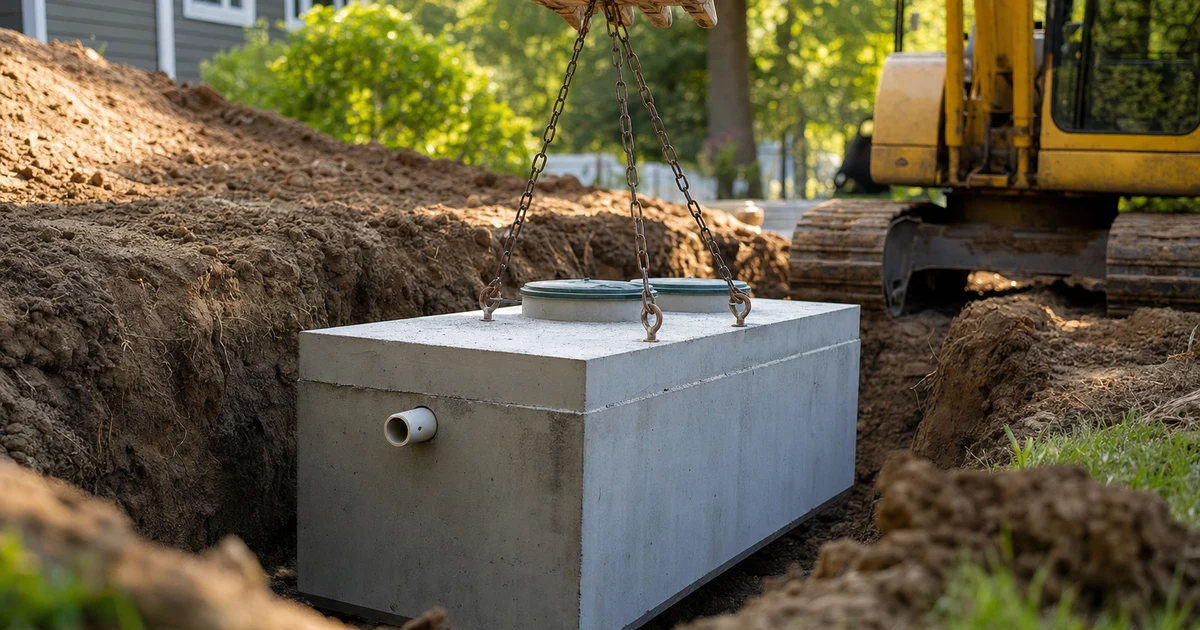
Septic company marketing is how a system installer wins more high-ticket install and drainfield jobs, turning local search, proof, and builder relationships into booked work.
Putting the system in the ground is the easy part. Winning the job is the hard part.
A new system or a drainfield replacement is a five-figure, permit-gated decision that goes to the installer a homeowner trusts to do it right and pass inspection. Here is how we think about marketing a licensed installer, not a commodity dig job.
Key takeaways
- High-ticket, permit-gated work is won on trust and proof, not the cheapest bid.
- Broad septic keywords pull cheap pumping clicks that are worthless to a company that installs.
- Septic installs follow a trigger, not a season: failed systems, new builds, real-estate deals, and county mandates.
- The best results come from one connected system, not five vendors who never coordinate.
- Fix your biggest constraint first instead of trying to fix everything at once.
Why does generic marketing fail septic installers?
Generic marketing fails because it treats a licensed, permit-gated specialty like a generic dig job. Installing a system is not just moving dirt.
It is sizing the right system for the soil, pulling the county permit, and passing the health-department inspection. A homeowner spending five figures is betting on the installer who can prove they do it right.
A generalist cannot speak to drainfields, perc tests, or advanced systems. Worse, a flood of cheap septic pumping clicks is worthless to a company that installs. Those leads are a different business entirely.
We market the licensed specialist. That means:
- Positioning you as the installer who sizes the right system, pulls the permit, and passes inspection
- Speaking the systems: conventional, mound, ATU, and engineered nutrient-reducing systems, matched to the soil and the code
- Targeting install intent like new septic system and drainfield replacement, not low-value pumping searches
- Surfacing your license, permits passed, and finished installs so a homeowner trusts you with a high-stakes decision
This is exactly why we only work in the green industry. We built our approach around septic installation marketing instead of bolting a plumbing or handyman playbook onto your business.
What makes septic company marketing different from other trades?
Septic installs do not follow a season. They follow a trigger.
A system fails. A new home gets built. A property changes hands in a real-estate deal. A county mandate forces an upgrade. Each of those is a different buyer with a different level of urgency, and your marketing has to catch all of them.
| Trigger | Buyer type | Urgency |
|---|---|---|
| Failed system | Homeowner searching now | High, wants a licensed installer fast |
| New construction | Builder relationship | Planned, not a search |
| Real-estate deal | Buyer or seller | Deadline-driven |
| County mandate | Forced upgrade | Researching fast |
Most installers grow on word of mouth and the health department's referral, then hit a ceiling. That referral flow is real, but it is not a system you control.
Marketing gives you a second engine that captures demand you are currently missing.
High-ticket, permit-gated work is won on trust and proof, not the cheapest bid, so the marketing has to build trust and proof at every step.
How do the pieces work together as one machine?
The best results come from one connected system, not five vendors who never talk to each other.
Most companies end up juggling a website person, an SEO person, an ads person, a reviews tool, and a CRM, none of them coordinated. We build and run the whole thing as one machine, so every piece points at the same goal: more booked install jobs.
Your website is the center. Your site is where the first click becomes the next booked estimate. We build fast, mobile-first sites that turn traffic into contacts instead of sitting there like a brochure. A website built to book jobs is the foundation everything else feeds into.
Local SEO gets you found first. When a homeowner with a failed system searches, you want to be the name they see at the top of the map pack and the organic results. Local SEO builds the pages and signals that put you there.
Google Ads catch buyers ready to hire now. The failed-system homeowner is high-intent and low-patience. Google Ads and Local Services Ads put you at the top of search the moment they are ready to book, with every campaign tracked to real calls instead of wasted clicks.
Reputation turns proof into leads. Proof is the whole game for a five-figure decision. Reputation management keeps a steady stream of reviews coming in and every response handled, so your credibility compounds over time.
How do you win the builder and the mandate work?
You win it with visibility plus a credibility layer that proves you are the licensed installer for the job.
Builders specify new-construction systems, and they specify the installer they trust to size it right and pass inspection. That trust gets built partly through relationships and partly through what a builder finds when they check you out online. Your site, your reviews, and your track record all do work here.
The county mandate and real-estate triggers are similar. Someone is forced into a decision they did not plan for, and they research fast. If your license, your permits passed, and your finished installs are front and center, you become the obvious choice.
Nearly every homeowner checks a company out online before they ever call. They are sizing you up across search, the map pack, ads, and reviews all at once, which is why the pieces have to work together.
A strong ad that sends people to a weak site loses. A great site nobody can find loses. Septic sits alongside the other project-based specialties we market, like excavation, where local trust is the wedge that turns a search into a booked project.
Where should you start with your own septic company marketing?
Start by figuring out which piece will move the needle fastest for your business, then build from there.
For some installers, the gap is visibility, and local search or ads close it quickly. For others, the traffic already comes in but the site and the follow-up leak leads before they ever turn into estimates.
You do not fix everything at once. You fix the biggest constraint first.
If you want a straight answer on where your fastest gains are, book a free strategy call. We will map which pieces matter most in your market and how they fit together into one system pointed at booking more install and drainfield work.
Find out where your SEO is leaking in a 20-minute strategy call
If your landscaping company is getting traffic but not enough qualified leads, let us look at the whole path: what people search, what page they land on, what it says, and what happens after they reach out.
Want this done for you? See our septic installation SEO service.
Frequently asked questions
What is septic company marketing?
It is how a septic installer wins more high-ticket install and drainfield jobs by turning local search, proof, and builder relationships into booked work. It markets you as a licensed specialist, not a generic dig job.
Why not just run ads for broad septic keywords?
Because broad septic keywords pull cheap pumping clicks that are worthless to a company that installs. We target install intent like new septic system and drainfield replacement so you get the jobs you actually want.
How do installers win five-figure jobs online?
By pairing visibility with a credibility layer. We surface your license, permits passed, and finished installs so a homeowner or builder can trust you with a high-stakes, permit-gated decision.
Do I need to hire separate vendors for website, SEO, and ads?
No. We build and run the whole system as one machine so the website, SEO, ads, reviews, and follow-up work together instead of fighting each other, all under one team.