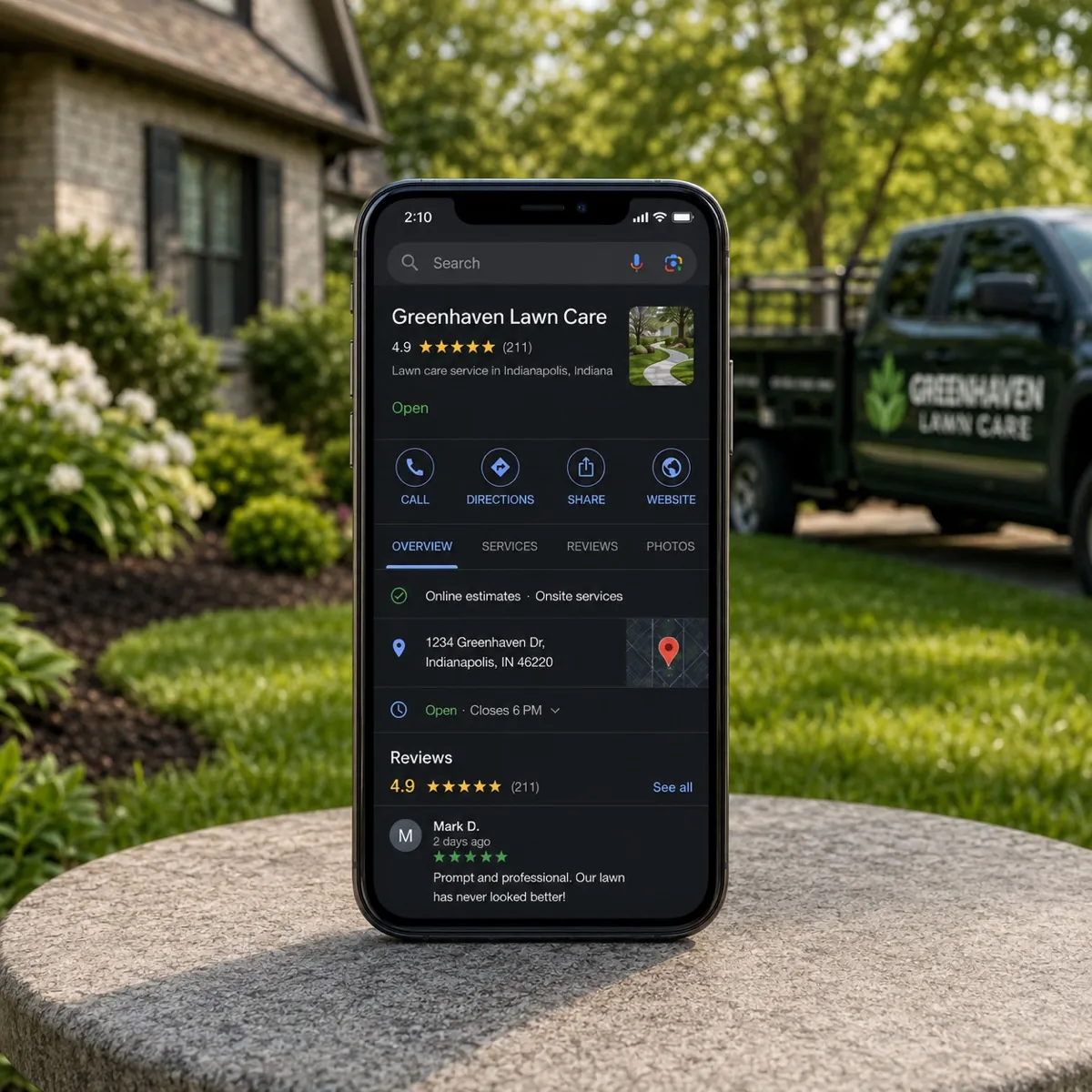
Local SEO is how a landscaping company gets found by the homeowners right around it. When someone nearby searches for lawn care or landscaping, you want your business to be the one that shows up. These seven steps are the foundation for making that happen.
Unlike broad SEO that chases a national audience, local SEO is about being the obvious choice in your own service area. The goal is simple: when someone in your market searches for a landscaper near them, your business is right there in the results, ready to earn the call.
If you want the deeper version of this playbook, we cover the strategy in detail in our guide to lawn and landscaping local SEO. This article is the quick, practical checklist to work through first. For a service-specific implementation path, see our landscaping SEO services.
Step 1: Understand what local SEO actually is
Local SEO is the practice of optimizing your online presence to attract more business from relevant local searches on Google and other search engines. Where general SEO focuses on a global audience, local SEO is about being the big fish in your local pond.
In practice, that means making sure that when someone in your area searches for "best landscaping service near me," your business is what they find. Everything below serves that one outcome.
Step 2: Optimize your website for local SEO
Your website is your digital storefront. A few fundamentals make it work harder for local search:
- Mobile optimization: make sure your site is mobile-friendly. Most local searches happen on a phone while the homeowner is on the go.
- Local keywords: work local terms naturally into your content. If you serve Springfield, IL, phrases like "Springfield lawn care" should appear where they fit.
- Location pages: if you serve multiple areas, build a separate page for each one, with its own content and local references instead of a single generic page.
Step 3: Claim and optimize your Google Business Profile
Your Google Business Profile (formerly Google My Business) is the cornerstone of your local presence. To get the most out of it:
- Claim your listing: verify your business so you control how it appears on Google's map.
- Keep information accurate: make sure your business name, address, and phone number (NAP) are consistent everywhere they appear online.
- Add photos and services: upload high-quality images of your work and a detailed list of the services you offer.
Refreshing your website and profile with new, locally relevant content keeps your audience engaged and signals to search engines that your business is an active, relevant resource in your area.
Step 4: Earn positive reviews
Reviews are one of the strongest inputs to local SEO. They boost both your credibility and your rankings.
- Ask satisfied customers: do not be shy about asking happy clients to leave a review.
- Respond to reviews: thank people for positive reviews, and address any negative feedback professionally.
- Showcase reviews: feature your best ones on your website and social media.
Step 5: Build local links
Local links anchor your business in the online community around you. A few ways to build them:
- Partner with local businesses: connect with complementary companies in your area.
- Local directories: get listed in reputable local business directories.
- Community involvement: take part in local events and sponsorships, and share that involvement online.
Step 6: Use local structured data markup
Structured data markup is a way of telling search engines exactly where you are located and what you do.
- Implement schema markup: use schema.org to add Local Business schema to your website so search engines understand your location and offerings.
Step 7: Engage with your local community online
Your online presence should be as local as your physical one.
- Social media: use platforms like Facebook and Instagram to connect with your local community.
- Local forums and groups: take part in local online forums and Facebook groups.
- Local content: publish posts about local events or lawn care tips specific to your region.
Dominating local SEO takes patience and consistency. Work through these seven steps and your landscaping business will not just appear in local search, it will become the name people in your market recognize.
Key takeaways
- Local SEO is essential. It is how landscaping companies get found by nearby customers who are ready to hire.
- Optimize your website. Make it mobile-friendly, use local keywords, and build separate location pages if you serve more than one area.
- Own your Google Business Profile. Claim it and keep the information, photos, and services accurate and current.
- Reviews matter. Ask for them, respond to them, and showcase them, because they move your rankings and your trust.
- Build local links. Partnerships and directories strengthen your presence in the market.
- Use structured data. Schema markup helps search engines understand and display your business in local results.
- Engage your community. Stay active on social media, in local groups, and with locally relevant content.
Want local SEO handled for you?
Working through these steps takes time most owners do not have. If you would rather have one team own your website, Google Business Profile, reviews, and local rankings as a single system, let us take a look at where you stand.
Want this done for you? See our landscaping SEO service.
Frequently asked questions
Why is local SEO important for landscaping businesses?
Local SEO helps your company show up when homeowners in your service area search for landscaping near them. That targeted visibility puts you in front of buyers who are ready to hire, instead of a national audience that will never become customers.
How often should I update my Google Business Profile?
Keep your Google Business Profile current at all times. Your business name, address, phone number, hours, and services should always be accurate, and adding new photos and posts regularly keeps the profile active and helps it perform in the map results.
Do online reviews really affect local SEO?
Yes. Reviews are a major local ranking factor and they build trust with the next person comparing landscapers. Ask satisfied clients to leave a review and respond professionally to every review, positive or negative.
What is the best way to build local links for a landscaping company?
Build relationships with other local businesses and community organizations. Local partnerships, sponsorships, event participation, and listings in reputable local directories all create links that anchor your business in your market.